

Electric bikes are safer than motorcycles due to lower risk of injury; but the potential for danger will increases, if rider don't pay attention to safety standards, improper riding methods, and disobeying the rules. Learn are electric bikes more dangerous than motorcycles to help you decide which vehicle is safer for daily use.
Key Takeaways
- There’s no clear evidence that electric bikes are inherently more dangerous than motorcycles; instead, overall risk largely depends on how and where they are used.
- The risk of severe injury is generally higher on motorcycles because they operate at higher speeds, leading to greater impact forces in crashes.
- Bike-related accidents are influenced by multiple factors, including rider inexperience, lack of protective gear, unfamiliar roads, and mixed traffic conditions.
- Because of greater road exposure and higher performance, motorcycles are subject to stricter safety regulations and mandatory equipment requirements.
- For both e-bikes and motorcycles, accident risk can be substantially reduced through responsible riding, proper safety gear, and awareness of road conditions.
Are electric bikes more dangerous than motorcycles? In simple terms, electric bikes (e-bikes) usually operate at lower speeds than motorcycles, which often results in lower crash impact and reduced injury severity. However, both vehicles still carry risks, and overall safety is influenced not only by vehicle type but also by riding environment, traffic conditions, rider experience, protective gear, and speed choices. To answer whether electric bikes are more dangerous than motorcycles, this article explains the key differences between the two vehicles, examines how crash risk and injury severity typically vary, explores common causes of e-bike accidents, reviews safety regulations for both e-bikes and motorcycles, and outlines practical ways to improve riding safety.
Are Electric Bikes More Dangerous Than Motorcycles?
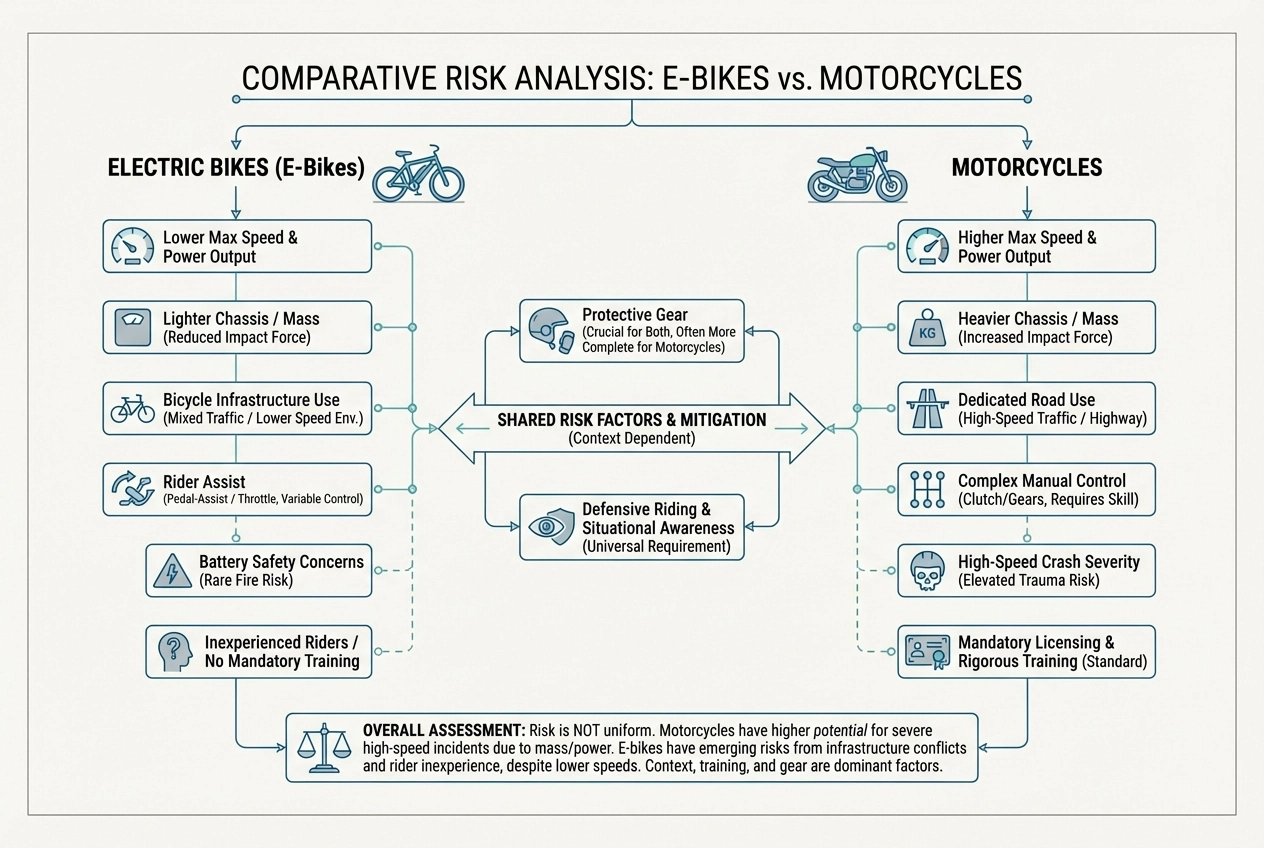
From a safety perspective, e-bikes are often associated with lower injury severity than motorcycles, mainly because they typically operate at lower speeds. Rider experience, traffic environment, protective equipment, and speed choices also play an important role in determining overall risk. For electric motorcycles and gas-powered motorcycles, because of their design they’re capable of traveling at even higher speeds and are legally allowed to drive on the highway with other fast and heavy vehicles. Consequently, accidents on these vehicles are likely to cause more severe injuries due to their size, speed, and weight which create more severe impact in a crash compared to e-bikes. On the contrary, even though e-bikes are seen as more less dangerous than motorcycles, riding an e-bike on the road requires that the rider be careful. Accidents occurs when e-bike riders travel in mixed-use areas without proper safety equipment or fail to control electric assist speed. In summary, e-bikes and motorcycles present different types of risk: motorcycles tend to involve higher injury severity, while e-bikes face greater exposure to urban and mixed-traffic hazards. e-bikes and motorcycles should be ridden by people who are properly educated on safe riding practices.
The Differences Table Between Electric Bikes and Motorcycles
Electric bikes and motorcycles are often confused because they're both two-wheeled, motor-assisted vehicles. However, both have basic differences that range from their system design, speed, to their usefulness. Therefore, here are some key differences between electric bikes and motorcycles.
| Aspect | Electric Bike | Motorcycle |
|---|---|---|
| Power Supply Type | Electric motor + pedal stroke | Electric motor, gasoline, or both |
| Speed Approx | 25-32 km/h (15-20 mph) | 80-100 km/h (50-60 mph) or 160 km/h (100 mph) on premium series |
| Weight Approx | 20-30kg | More than 100kg |
| Required Skill Level | Beginners | Advanced, experienced, and dependable riders |
| Protective Gear Level | Rules vary by location, so helmets are usually optional | Safety gear, including helmets, is required |
| Roads Flown | Urban areas, city streets, and bike paths | Urban areas, main roads, and highways |
| Licenses & Registration | No license needed | A driver's license and vehicle registration are required |
| Accident Expectation | Minor injuries | Life threatening injuries |
| Maintenance | Simple | Harder and costlier |
| Ideal Use Case | Leisurely short rides | Long rides with high average speeds |
Accident Statistics: Are E-Bikes or Motorcycles More Likely to Crash?
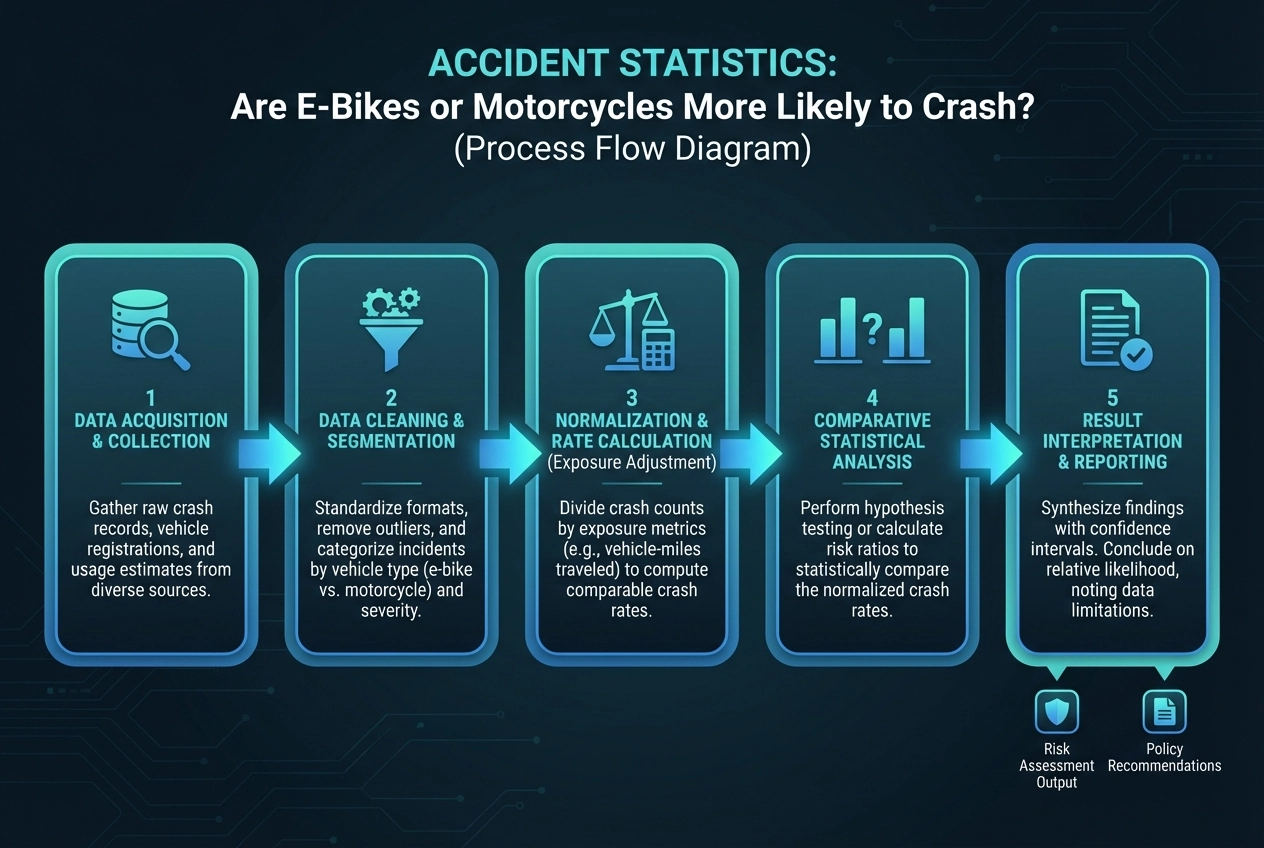
Motorcycles are involved in more accidents than e-bikes because they’re faster and are ridden on bigger roads. One U.S. motorcycle accident report showed that in 2023 there were approximately 82,000 motorcycle-related injuries. When accidents do happen, motorcycle riders are more likely to suffer serious, life threatening injuries than e-bike riders. However, as safe as e-bikes seems, they still require a lot of focus and concentration. It’s because, in urban areas where e-bikes must be ridden, e-bike riders are able to suffer minor to moderate injuries. Even though fatalities are relatively rare, reports indicate that in 2023 there were approximately 49,000 e-bike-related accidents. As noted, motorcycles have a greater risk of accidents than e-bikes. Both types of vehicles experience crashes that are influenced by surrounding factors–one of them is how users ride their e-bikes. When both users obey the rules and ride safely, e-bike and motorcycle accidents are minimized.
Common Causes of Accidents on Electric Bikes
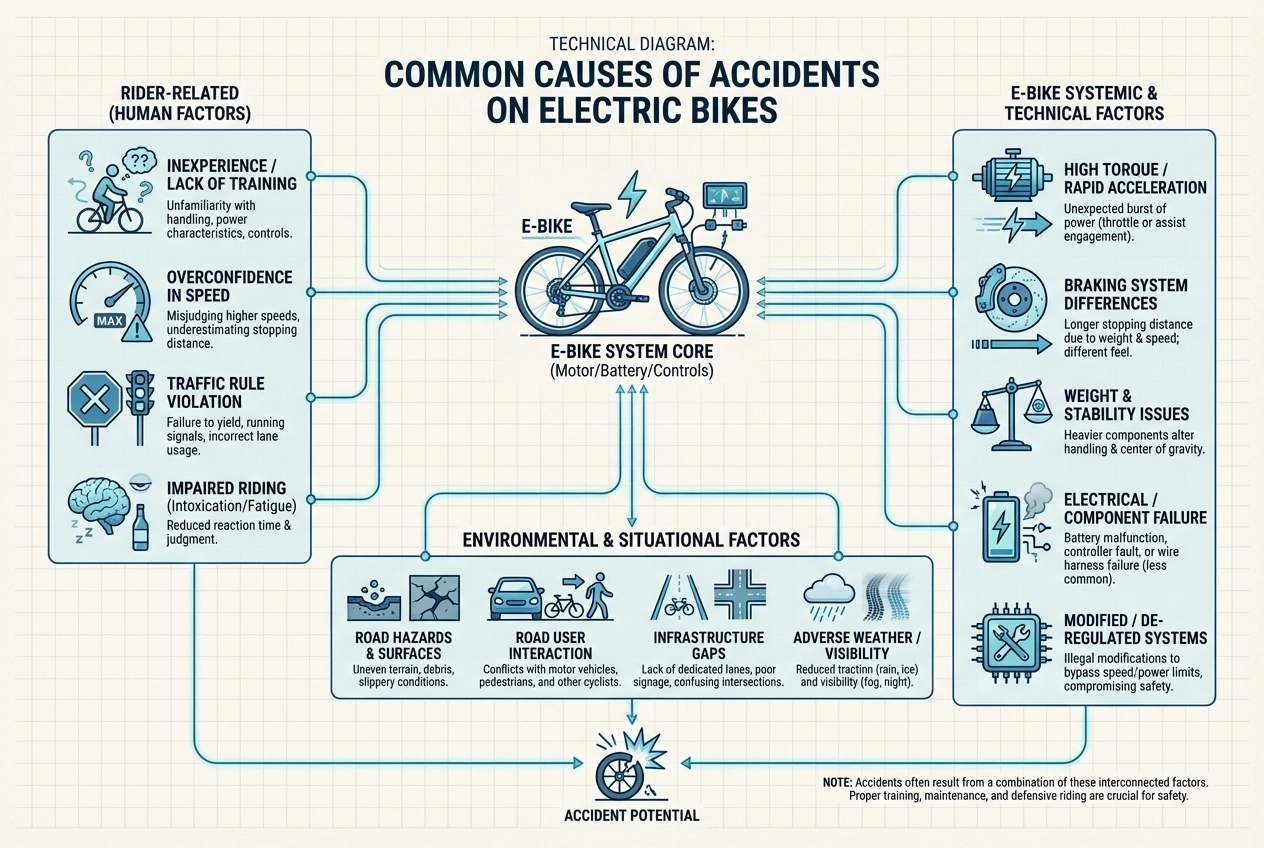
As e-bikes usage increases in urban areas, the number of accidents involving these vehicles increases. This makes many people assume that e-bikes are more dangerous than motorcycles. In fact, e-bikes are relatively safer than motorcycles when used properly and safely. Therefore, here are the common causes of accidents on electric bikes. Going Too Fast: The added help of the electric motor makes riders feel like they can pedal as fast as they want. In tight spaces, it's easy to get out of control. No Gear Safety: Some riders aren’t wearing helmets or knee pads. Falling while not wearing safety gear will increase injury potential. Overconfidence and Inexperience: Beginners get too confident in their own abilities. When miscalculating how much pressure to put on the brakes, they’ll likely run into an accident. Bad Road Conditions: Look out for potholes and other uneven surfaces. Because e-bikes have smaller wheels, it’s hazardous to e-bikes. Driving in Stray Traffic: Mixed environments such as cars, bikes, and people are some of the most dangerous if the driver isn't concentrated and experienced. Bad Tires: Old or uneven brakes are also able to put e-bikes at risk of getting punctured. E-bikes also suffer more from extreme wear from the tires. Distraction: Riding with a phone in your hands will cause an accident at any time. Night Riding: Riding at night increases the chance of an accident, especially without a proper light.
Safety Regulations for Electric Bikes and Motorcycles
To reduce the risk of danger when riding, whether on e-bikes or motorcycles, you need to pay attention to the following safety rules and standards.
Electric Bike Regulations and Safety Standards
Regulations and safety standards for e-bikes are generally less restrictive than those for motorcycles, here is an explanation. Speed Limit: Depending on the riding category and area, riding speed should be within the range of 25-32 km/h on the average. Licensing: There are no e-bike licensing requirements, and no vehicle registration is needed, but ensure that you have the ability and experience to ride. Helmet Laws: In many regions, helmet use is optional, but wearing one is strongly recommended to avoid greater injury in the event of a fall. General Accepted Locations to Ride: E-bikes are permitted on bicycle paths, in the cities, and as the regulations in your area allow. Safety Accessories: Ensure your e-bike has a light and a reflector, fully operational brake parts, and a bell.
Motorcycle Regulations and Safety Standards
Generally, the regulations and safety standards of motorcycles are much stricter and more complex than those of e-bikes, here's a breakdown. Licensing and Registrations: Owning a motorcycle means there’s a need for an official riding license, registration of the motorcycle with the authorities, and a license plate. Helmet and Protective Gear: While riding, a safety helmet and other legally required gear must be worn. Vehicle Safety Standards: Safety standards must be met and include having functional lights and brakes. Speed and Road Access: With certain speed restrictions, these vehicles are able to be used on major highways and roads. Regular Inspection: In some areas, it is mandatory to carry out inspections of the motorcycle regularly to confirm the vehicle is still in road-worthy condition.
How to Improve Safety When Riding an Electric Bike
Although it's known that using e-bikes is safe, you still need to pay attention to safety when riding them. Here are some ways to improve safety when riding e-bikes. Always Wear a Helmet: Ensure you wear a helmet when riding, as it provides critical protection for both short and long trips. Control Your Speed: Never ride e-bikes too fast, especially in crowded areas, corners, or uneven roads. Use Proper Lighting and Reflectors: Ensure that the front, rear lights and reflectors on your e-bikes are in good working order–especially when you're riding at night. Stay Visible to Other Road Users: Always wear bright or reflective clothing to make it easier for other road users to realize your presence. Brake Earlier and Smoothly: Although e-bikes are quite lightweight, they're generally much heavier than regular bicycles, so braking requires a longer distance. Avoid Distractions While Riding: Never use other electronic devices that will distract you from the road while riding. Follow Traffic Rules: Always obey the traffic signs and use the designated lanes in accordance with the e-bike rules in your area. Adapt to Road and Weather Conditions: Reduce riding speed in rainy weather, slippery roads, or low light conditions to avoid accidents.
Conclusion
In conclusion, e-bikes generally involve lower injury severity than motorcycles when accidents occur. However, improper use, not using safety standards, and not paying attention to riding rules will increase the risk of injury. Therefore, if you want to avoid potential danger during riding, ensure that you ride well by following the rules and always apply the right safety standards.
FAQs
Do electric bikes require helmets like motorcycles?
Helmet requirements for electric bikes depend on local laws. In many regions, helmets are not legally required for e-bike riders, unlike motorcycles. However, wearing a helmet is strongly recommended to reduce the risk of head injuries.
Can bike electrics cause serious injuries like motorcycles?
Yes, electric bikes causes serious injuries, but the risk is generally lower than motorcycles because e-bikes operate at lower speeds and generate less impact force in crashes. As a result, injuries from e-bike accidents are typically less severe than those involving motorcycles.
What is the leading cause of death in e-bike accidents?
The leading cause of death in electric bike accidents is head injury, often resulting from riding without a helmet. Wearing a helmet significantly reduces the risk of fatal head trauma.
Why do some people think electric bikes are more dangerous than motorcycles?
Some people perceive electric bikes as more dangerous because they’re often ridden without protective gear and frequently operate in mixed traffic environments alongside cars, pedestrians, and bicycles, increasing the likelihood of minor accidents.
Are electric bikes safer than motorcycles in traffic accidents?
In traffic accidents, electric bikes generally involve lower injury severity than motorcycles due to lower speeds and reduced crash impact. However, overall safety still depends on rider behavior, traffic conditions, and protective equipment.
What are the disadvantages of an e-bike?
Electric bikes have several disadvantages, including limited riding range, battery degradation over time, reduced stability on rough roads, and safety risks that are sometimes underestimated by riders.